


AllianceHCM MyPay
4.0382.00 Reviews
App Specs
- Version
- 3.4.59
- Updated On
- License
- Free
- Downloads
- 500,000+
- Developer
- Alliance Payroll Services, LLC
- Categories
- Business
- Platform
- Android
Screenshots
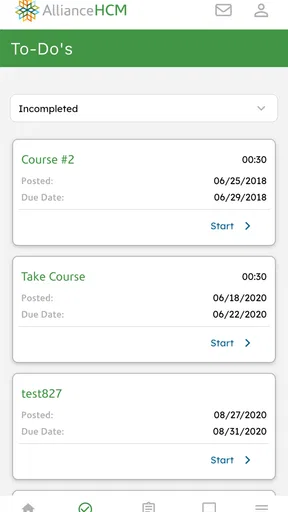
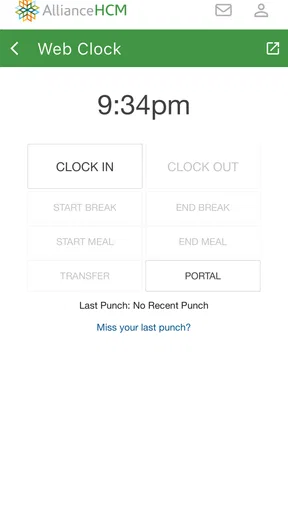
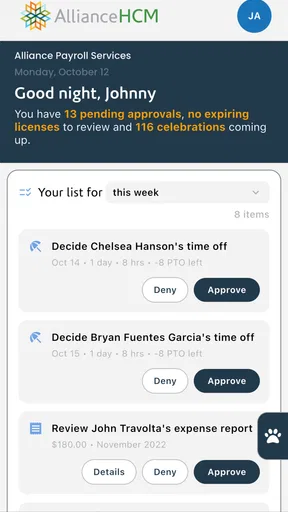
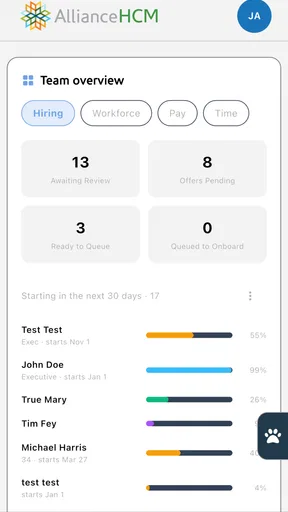
 Analysis by AppCompare
When I need to check something related to work, I would rather open one focused employee portal than search through old emails, shared files, and payroll messages. That is the role AllianceHCM MyPay tries to fill: a free business app from Alliance Payroll Services, LLC for payroll and human-resources access. I found it most useful as a companion to an employer’s existing payroll setup, not as a complete replacement for every HR conversation.
The app has a practical audience. Employees can use it when they want a quicker route to work-related information, while employers can offer a single mobile doorway into the services handled through AllianceHCM. Its store summary presents it as an employee portal for payroll and HR management, and that description matches the way I approached it: this is primarily an access tool, not a productivity suite, social app, or personal finance manager.
With an average rating of 4.0 from around 1.1 thousand ratings and more than 500 thousand installs, it has clearly reached a substantial group of users. It is rated for Everyone, costs nothing to download, and the current version is 3.4.59. Those details make it easy to try, although the real value still depends heavily on whether your employer uses the AllianceHCM services behind the app.
From a payroll question to a useful answer
I find a payroll question is easier to handle when I first separate what I can check myself from what needs an employer’s answer. That distinction is especially useful when a phone is shared at home: the device may be communal, but employment information and sign-in details should remain personal. From there, it helps to look at how access should be approached before anyone tries to coordinate around the app.
The starting condition matters more than the download
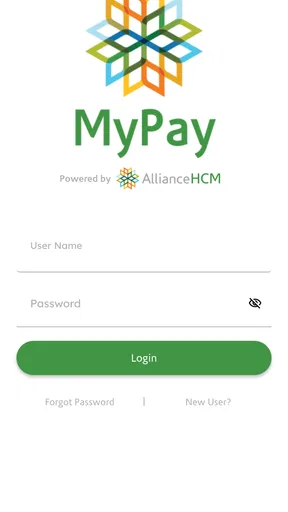
The first thing I would tell a new user is that installing AllianceHCM MyPay is only the beginning. A payroll portal is different from a general app where anyone can create an account and immediately explore all functions. Your employer’s setup determines what appears after you sign in, so the app makes the most sense when your workplace has already told you to use it.
That creates a simple but important starting check: confirm that your company uses AllianceHCM and find out which sign-in details or enrollment instructions it expects employees to follow. If you download the app before that point, you may have a polished portal on your phone but no meaningful route into your employment records. In my view, this is the main distinction between a useful installation and a wasted one.
I also would not treat it as a general-purpose replacement for contacting payroll or human resources. If a paycheck looks wrong, a portal can help you inspect the relevant information, but it may not be the place where a correction is approved. That difference becomes important later in the workflow, especially when an issue crosses from viewing information into changing an employer-controlled record.
Worth Reading Before You Choose

EA SPORTS FC Mobile 26 Is a Bigger Football Game, but It Takes Time

Flipboard Shows What News Apps Must Do Beyond the Feed

Switching to Android Auto Means Rethinking Your Driving Routine

Google Calendar Makes a Crowded Week Easier to Manage

Ludo King Makes the Most of the Minutes Between Plans

Baby Panda World Brings Quick Play to Modern Phones, but Its Game Library Feels Busy
Getting oriented without overcomplicating the job
Once access is available, the app’s strongest quality is its narrow purpose. I do not open it expecting entertainment, budgeting tools, or a large collection of unrelated workplace functions. I open it with a question in mind: do I need to review something connected with payroll or HR, and can I find the right area without involving another person?
That focused approach is helpful on a busy day. Instead of asking a manager to resend information or looking through a desktop browser, I can start from the employee portal and work toward the relevant record. The app is especially sensible for people who work away from a desk, move between locations, or simply prefer handling routine checks from a phone.
There is also a useful habit here that is easy to overlook: decide what you are trying to verify before opening the app. “I want to check my latest payroll information” is a better starting point than tapping around without a goal. It reduces the chance of confusing a personal question with an employer-side request and makes the handoff to HR clearer if the portal does not resolve the issue.
A practical step-by-step workflow
My recommended workflow begins with the reason for the visit. If I am checking whether a payroll detail looks familiar, I go in with the relevant pay period or workplace event in mind. If I am looking for an HR-related item, I first identify whether I need to read information, retrieve a document, or ask someone to make a change. Those are different jobs, even when they begin in the same app.
Next, I sign in and look for the area that matches that job rather than browsing every available option. The exact screens can depend on the employer’s configuration, so I would not assume that every employee sees the same portal layout. This is one of the app’s practical trade-offs: the employer-specific design can make the experience relevant, but it also means a friend’s instructions may not match your own screen exactly.
After locating the relevant information, I compare it with what I expected from the workplace event. For example, after a normal pay cycle, I might use the app to review the information available to me and check whether it aligns with my own records. If something appears unfamiliar, I note the specific item instead of sending a vague message to payroll. That small step saves time because the eventual question becomes easier to answer.
Finally, I decide whether the task is complete. If I only needed to inspect information, I can close the app. If I found a discrepancy, the next step is usually a human handoff through the employer’s established process. The portal helps me prepare that conversation, but I would not assume that viewing a detail inside the app automatically submits a correction or changes a payroll record.
Where the handoffs happen
The most important handoff is between the employee and the organization’s payroll or HR team. AllianceHCM MyPay can make the employee side more convenient, but the employer remains responsible for the underlying records and procedures. That means the app works best when I use it to gather precise information before contacting the person who can actually resolve an issue.
A realistic example would be a worker checking a pay-related detail after a shift pattern changes. The employee opens the portal, reviews the information available there, and notices something that deserves clarification. Rather than repeatedly refreshing the app, the employee records the relevant detail and contacts payroll through the company’s normal channel. Payroll can then investigate the source record, while the employee has already completed the initial inspection.
That division of responsibility is a strength, but it can also feel like friction. A user may expect an employee portal to answer every question end to end. In reality, it may only expose the information that the employer has made available. If the answer depends on an approval, a policy interpretation, or an internal correction, the app becomes the first stage of the process rather than the final stage.
There is a second handoff between the app and the user’s own record keeping. I would not rely on a portal alone for important personal documentation. When a detail matters, I prefer to read it carefully and retain whatever the employer’s process allows me to retain, then keep my question specific. This is not a criticism unique to AllianceHCM MyPay; it is a sensible habit whenever an app provides access to employment information rather than full ownership of it.
What the workflow delivers
At its best, the result is less searching and fewer routine interruptions. An employee can begin with a question, open the mobile portal, inspect the available payroll or HR information, and decide whether the matter is settled or needs escalation. That is a modest outcome, but it is exactly the kind of modest outcome that can make an employee-facing business app worthwhile.
I particularly like the app for quick checks that would otherwise tempt me to wait until I was back at a computer. The phone format makes the portal feel closer to the moment when the question arises. Someone leaving work, traveling between sites, or managing a changing schedule may value that convenience more than someone who already spends the whole day inside a desktop HR system.
The result is less impressive when the user expects a broad financial dashboard or a universal HR toolkit. AllianceHCM MyPay is not something I would choose as a personal budgeting app, a tax-planning service, or a replacement for direct communication with an employer. Its usefulness comes from connecting an employee to the specific payroll and HR environment provided through Alliance Payroll Services, LLC.
The app’s free price also lowers the barrier for employees who simply need access. However, “free” does not mean independent of workplace arrangements. The meaningful question is not whether the download costs money; it is whether your employer has enabled the portal and whether the information you need is included in your organization’s setup.
Three habits that make it more useful
First, I would use it as a verification checkpoint rather than a place to guess. Before contacting payroll, compare the portal information with your own understanding of the relevant work event and write down the exact point of confusion. This turns a general concern into a focused handoff and makes the app part of a clearer workflow.
Second, I would separate “I need to see this” from “I need someone to change this.” The first task belongs naturally in a self-service portal. The second may require an employer-side process, even if the app helps you identify what needs attention. Keeping those tasks separate prevents the common mistake of assuming that opening a record is the same as submitting an update.
Third, I would judge the app by repeat convenience, not by a single successful launch. The real test is whether it shortens the path for the routine questions you actually have. If your workplace information is rarely needed, the app may not become part of your daily habits. If you regularly need payroll or HR access away from a desk, the mobile format has a much stronger case.
These habits also explain why store ratings should be read with context. AllianceHCM MyPay has around 382 written reviews and a 4.0 average, which suggests a generally positive but not flawless reception. That feels plausible for an employer-connected portal: satisfaction can depend not only on the app itself, but also on account setup, available employer features, and how clearly the organization explains the sign-in process.
Where the flow breaks
The first failure point is access. If an employee does not know whether the company uses AllianceHCM, or does not receive clear enrollment guidance, the app cannot solve that uncertainty on its own. This is the kind of problem that can make a capable portal feel unusable, even though the underlying issue is the handoff from employer to employee.
The second is expectation. People often download payroll apps hoping to correct an error immediately, find every HR policy, or communicate directly with the right department. AllianceHCM MyPay should be approached more carefully. It is an employee access point, and the scope of the experience depends on what the employer has arranged. When a question requires approval or investigation, the workflow naturally leaves the app.
A third break occurs when the mobile view is not the best place for a complicated task. A quick check is one thing; carefully reviewing a detailed employment matter may be easier on a larger screen or through a direct conversation with HR. I would switch methods when the screen makes comparison difficult or when the issue has consequences that deserve confirmation rather than a hurried tap.
There is also a practical limitation in relying on a current phone app for information that matters over time. I would avoid assuming that every past detail will always be equally convenient to revisit. For important employment records, I prefer to follow the employer’s own document-handling process and keep my questions organized. The app can improve access without becoming the only place I depend on.
Who should use it, and who should look elsewhere
I think AllianceHCM MyPay is a good fit for employees whose organizations already use AllianceHCM and who want a straightforward mobile route to payroll and HR information. It is especially useful for people who do not sit at a desk all day, need occasional access outside working hours, or want to inspect a detail before contacting payroll.
It is less suitable for someone looking for a standalone service that works without employer participation. I would also point elsewhere if the main goal is personal money management, detailed tax preparation, time tracking across unrelated employers, or a full HR administration system for running a company. Those needs call for different tools, and forcing them into this portal would create unnecessary frustration.
Compared with the usual alternatives, the app’s advantage is directness. A mobile employee portal can be faster than emailing a request, waiting for a reply, or navigating a desktop HR website for a simple check. Its weakness is the same source of that directness: it is tied to the employer’s configuration. A general office suite may offer broader collaboration, while a dedicated finance app may offer deeper personal analysis, but neither is necessarily a better route to employer-provided payroll information.
My recommendation after following the whole process
I would recommend AllianceHCM MyPay to an employee who has been directed to use it by an organization connected with Alliance Payroll Services, LLC. The app makes the most sense when the goal is clear: open the employee portal, find the relevant payroll or HR information, verify what you can, and escalate only the parts that require a human decision.
I would keep expectations realistic. This is not a magic fix for payroll problems, and it does not remove the need for a company’s HR or payroll team. Its value is in reducing the distance between an employee and the information already made available to them. When that distance is the main inconvenience, the app can be genuinely handy.
For me, the deciding question is simple: will this app shorten a real workplace task I repeat? If the answer is yes, the free download and Everyone rating make it an easy option to try on a supported device running Android 7.0 or later. If the answer is no, installing it without employer guidance will probably not add much. Used within the right workflow, AllianceHCM MyPay is a practical access tool rather than an all-purpose HR solution, and that focused role is both its clearest strength and its main limitation.
Pros
- Quick access to pay statements and tax documents from your phone.
- Secure login helps protect sensitive payroll and personal information.
- Displays earnings
- deductions
- benefits
- and year-to-date totals clearly.
- Useful notifications can alert you when new payroll documents are available.
- Convenient for employees who need payroll details while away from work.
Cons
- Some features may be unavailable if your employer has not enabled them.
- Login or account recovery may require assistance from your HR department.
- Payroll updates depend on your employer’s submission and processing schedule.
- The interface can feel limited compared with full-service personal finance apps.
- Requires an active AllianceHCM-supported employee account to use.
FAQs for AllianceHCM MyPay
What is AllianceHCM MyPay used for?
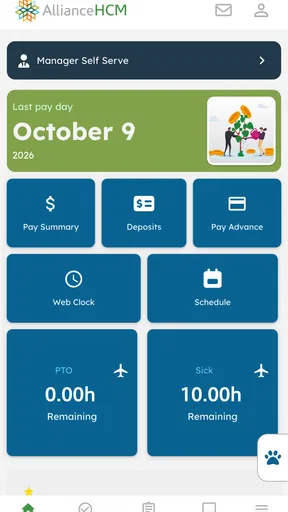
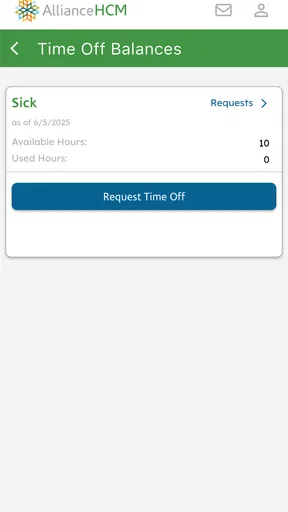
AllianceHCM MyPay is designed to give employees convenient access to payroll and human resources information from a mobile device. Depending on the features enabled by your employer, you may be able to view pay statements, check earnings and deductions, review tax details, access benefits information, update selected personal data, and receive workplace notifications without needing to use a desktop computer.
How do I log in to AllianceHCM MyPay?
To use AllianceHCM MyPay, you generally need an account provided or activated by your employer. Your organization may require a company code, username, password, employee identification number, or another sign-in method. Some employers also enable multi-factor authentication. If you cannot log in, the app may not be the right place to create an account, so contact your payroll or HR department for enrollment and password assistance.
Can I view my payslips and tax information in the app?
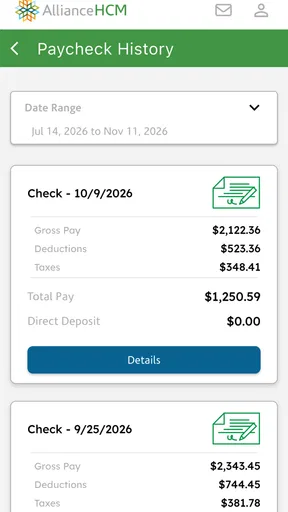
In most supported employee configurations, AllianceHCM MyPay allows users to review digital pay statements and related payroll information. Available details can include gross pay, net pay, deductions, taxes, payment dates, and year-to-date totals. The exact information depends on your employer’s AllianceHCM setup, so some users may see fewer options or may need to use the web portal for documents such as tax forms.
Is AllianceHCM MyPay secure for accessing payroll information?
The app is intended for accessing sensitive employee and payroll data, so you should use it carefully and keep your login credentials private. Download it only from an official app store, install updates when available, use a strong password, and enable device security such as a screen lock. Avoid signing in on shared or public devices, and contact your employer promptly if you notice suspicious account activity.
What should I do if payroll information is missing or incorrect?
AllianceHCM MyPay displays information supplied by your employer’s payroll and HR system, meaning the app itself may not be able to correct a missing or inaccurate payment record. First, refresh the app and confirm that you are viewing the correct pay period. If the issue remains, contact your payroll, HR, or system administrator, since only your organization can usually update employment and payroll records.


